The Clown

This week I received a letter from an old university friend. She had been the girlfriend of my bandmate Paul, back in the day. Inside was an aged and yellowed article from Coventry University’s student newspaper, circa 1997. My recent blogging trips down Memory Lane had prompted her to fish it out for me. The headline read; “COLONEL MUSTARD – SO HOT!” The article went on to discuss Coventry’s band scene of the day while paying special tribute to Colonel Mustard – my band. It was signed off ‘V.E.’ I winced at the gushing remarks. I winced because I was well aware of the fact that it was I who had written the painfully saccharine text and used a friend’s name as a pseudonym in a shameful act of self-promotion. Still, it put a smile on my face. There was a photo inset of myself and my bandmates, Paul and Matt (with Karl the drummer obscured from view), the first incarnation of ‘the band’, all fresh-faced and enthusiastic, convinced we were about to be the next big thing. I remember that feeling. I felt invincible. 

I suppose it was this air of invincibility that made us impervious to the many rejection letters we would receive from various record companies, expressing thanks for the demo tape but it ‘just wasn’t their thing’. Undeterred, we eventually headed down to London. We were convinced if they could just meet us and see how passionate we were they would sign us up on the spot. We were met with a mixed response, acoustically serenading the record company execs from outside their offices whether they liked it or not, even trying to gain access to a couple by masquerading as Fedex couriers before revealing our guitars and bursting into song. We pitched up outside of EMI for a whole week. We had a huge banner that read LITTLEBIGMAN (the band’s new name) tied to the railings opposite while we sang the same three songs over and over again. To our surprise, on the final day of the week, just before we were about to go back to Coventry with our tails between our legs, they let us in at EMI.

“I like it,” said the A&R man, leaning back in his chair, as we finished playing him one of our songs, “I almost joined in.” 

He directed the pen he’d been chewing towards the electric organ in the corner of the room.  This guy was just too cool.

“Really?” we said, all starry-eyed.

“Tell you what,” he said, scribbling something onto the back of his business card. “No promises but you get a gig at this place, the Kashmir Club, and I’ll come along.”

We thanked him and headed back to Coventry entirely full of ourselves and our impending success. We were so sure this was it, our ticket to the big time. But something was bugging me, the toxic and pernicious seed of lacking self belief. Of course, he was just humouring us. it whispered. He wouldn’t really come to a gig, let alone sign us up. I mean it was Chrysalis Records, part of EMI, EMI for God’s sake. That seed of self-doubt had started to grow and it penetrated the mask of invincibility and self-certainty I had won others around with. We never did sort out that gig at the Kashmir Club or contact the A&R man. And I’m pretty sure soon after that we changed the band name again. It would be a recurring theme in my life, any time something could potentially get good, every glimmer of real success, I would push it away, or try to change it. Fear of failure or fear of success, who knows? But I do know that I have let my fair share of opportunities slip away to nothing.

Here is this week’s song. I hope you like it 🙂

https://nigelashcroft.bandcamp.com/track/the-clown

Let Sleeping Dogs Lie


When I started writing my memoirs and releasing my songs at the beginning of the year, I thought I’d have a story to tell behind each song, no matter how tenuous the link. Maybe where I was when I wrote it, who I was with, how I was feeling. Perhaps something I had observed or read about that led me to pick up my guitar and write. Truth be told though, I don’t know where this particular song came from. I don’t even know what it’s really about. And yet I do believe it somehow. And maybe that’s all some songs need to do, give you enough space and ambiguity to find your own story within it. Some songs I wrote in minutes. Others took me a long time. This song has had a few incarnations over the years but I could never get it right. I laboured over it, writing different sections that would eventually elope and find themselves married to other songs. In the end the solution was simple. I stripped it back to what had been just the chorus and wrote two other verses over the same melody and chord sequence. And now I’m finally happy with it.

It started with a seed, as all songs do. For me, it’s usually a melody. The melodies always came naturally to me, much to the detriment of my lyrics at first, as I just wanted to get the songs out there, no matter how obvious (or just plain bad) the words. I was impatient. But time, and more importantly some wonderful songwriters I had the pleasure of working with and learning from, taught me patience. I now find myself completing songs from a huge reservoir I have had in my head for many years.

I would have been living in Bangkok, Thailand when the seed of this song germinated. Certainly when I play it now, I am transported back to that time. It was 2002 and I was in my late 20s. I was teaching English in a college but would also go out busking in Siam Square, one of Bangkok’s shopping districts. At first, I lived in a guest house tucked away down a dark alley off the bustling, neon-lit Khao San Road. Then, a Thai friend of mine put me up in her vacant ‘maid’s quarter’ of her condominium on the other side of the city. She was rarely there, always travelling between Japan and Thailand for work. It was a sparse room with no windows. The heat at night was unbearable, and yet there was something comforting about my anonymity there. I was hidden from the world up in that tower and it suited me fine. Some nights, I would take my guitar and climb to the rooftop to gaze upon the city.

Bangkok was unlike anywhere else I had ever been. It had a unique energy about it, a part-dystopian entanglement of beauty and danger, of wealth and poverty, of the old and the new. It was a city of a million stories. I would marvel at it from my vantage point on those warm evenings, as I picked my guitar and plucked melodies from the air, appearing to me like fireflies in the night.

Anyway, enough of that. Here’s my song. You can find your own story within it if you like. Enjoy 😉 x

https://nigelashcroft.bandcamp.com/track/let-sleeping-dogs-lie

The Circle

India, 2011

The train spat us out onto the deserted platform, and with a weary groan, heaved its shuddering bulk back into the night. We were alone. Well, as alone as anyone could be in an Indian train station, for experience had taught me that there were always people in the shadows. But this was more of a dusty backwater stop, and I was dismayed to see no rickshaw drivers at this late hour, even though they must have known that the train from Mumbai had been grossly delayed and there was business to be had. My father looked at me incredulously, hunched under the weight of his backpack. Give me the backpacker experience, he’d said. He already looked defeated. We hadn’t slept properly for days. 

It had started with an unfortunate incident on the plane. I had been making my way to the toilet at the rear, past sleeping passengers, when I noticed a couple of stewardesses hunched over a body. Closer inspection revealed it was my father. He was out cold. I panicked. Slowly though, he came to. We got him back to his seat, the stewardess giving a knowing look as she spied our stockpile of tiny empty wine bottles (mainly mine but I had shoved them over to his side). It was my fault, I had insisted we celebrate the beginning of our Indian adventure with the complimentary red wine. He had become so dehydrated (and a little tipsy) that he had fainted, knocking his head as he fell. 

We arrived in Mumbai, my father still groggy from the knock to his head.

“First time in India, gentlemen?” the taxi driver called over the rumble of his engine, as he zigzagged haphazardly from lane to lane through the cacophonous traffic.

“No, I’ve been a few times,” I assured him. I looked over at my father, white-knuckle-clenching the edge of his tatty seat with a look of dread in his eyes. 

“But it’s my father’s first time.”

It would be a few days before we finally made it to the abandoned train stop in Goa late that night. One thing after another had delayed us. We were exhausted. We walked to a road and after a while found a rickshaw to take us the rest of the way to Arambol. The village was quiet when we arrived and as we ambled down its stoney street I could sense my father getting more and more irate. 

“Don’t worry Dad. This is India. Things just happen,” I said as a way of reassuring him, but it just sounded flakey.

“I’m not sleeping in one of those bloody things,” he said, pointing to the bamboo-framed stalls that lined the street with their tarpaulin fronts drawn closed.

“I wouldn’t expect you to, Dad. They’re shops.”

And then we heard a beautiful song drifting through the warm night air. I noticed my father’s disposition start to change. We pursued the sound down a sandy path, sensing the sea close by, but before we reached the water the music pulled us through a portal in a hedge and we found ourselves in a hidden enclave. Bamboo huts circled a clearing where people were sat around a fire, performing or listening to the music. An Israeli man with kind eyes greeted us. He found a hut for us to stay in then fetched food and beer. We sat down and I took out my guitar. My father was in his element, chopping wood for the fire. He had finally started to relax.

I wrote this song the following day, swaying in my hammock with my guitar, my father happily reading a copy of the Bombay Post, sipping a cup of tea. It felt like a wonderful, fortuitous thing to have stumbled across this place, and maybe travelling with my father wasn’t going to be so bad after all. I had watched the way he had interacted with the people the night before. I was proud of him. And I had realised that night he wasn’t only my father, he was also a dear friend.

https://nigelashcroft.bandcamp.com/track/the-circle

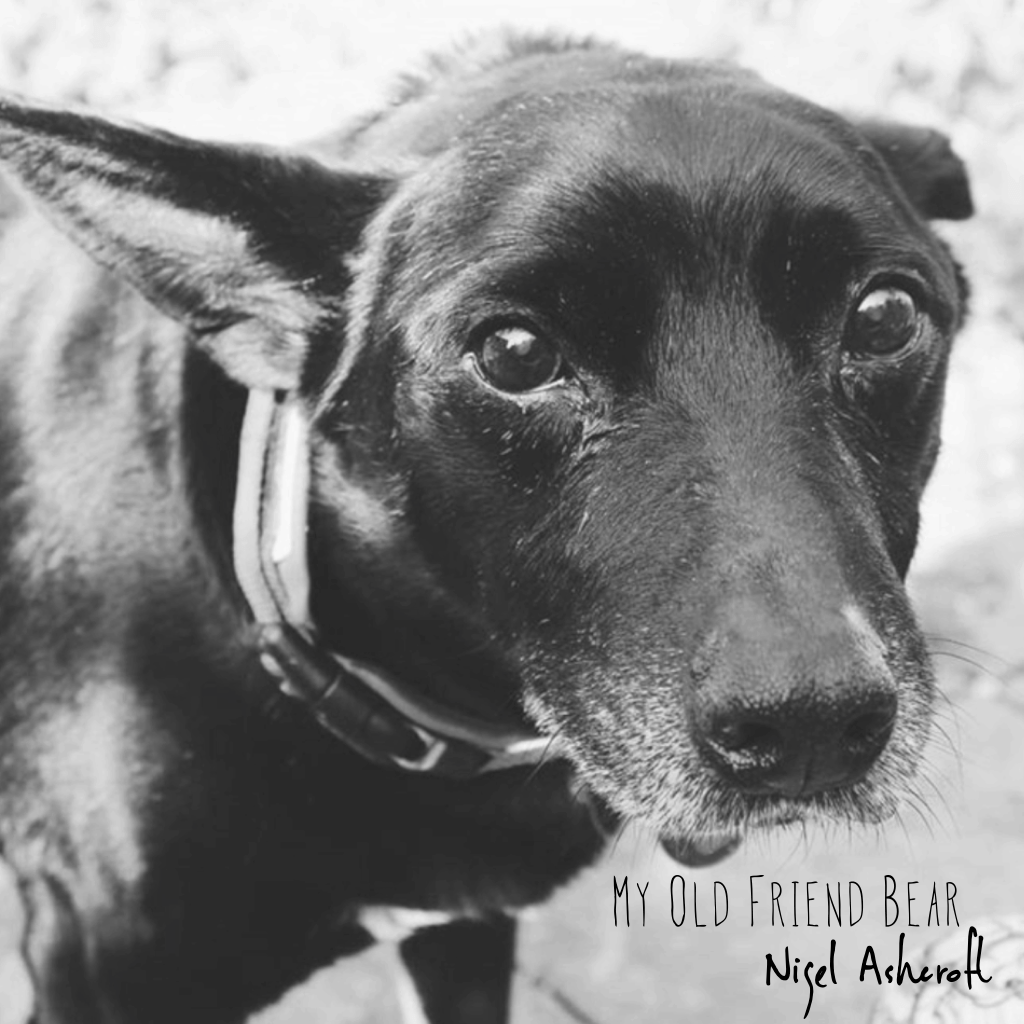
My Old Friend Bear

I am standing in the middle of our street as the car drives away. A sad pair of round, brown eyes stares back at me through the rear window. I desperately want to lift my arm and wave goodbye, but I know if I do I will start to cry and never stop. I am 8 years old. Ben, my wild-spirited Springer Spaniel, is a little over a year old. We have been best friends since he was born, but his youthful exuberance, continual house-breaks, and penchant for chewing furniture, have proven all too much for my father who has found another family to love and take care of my dog. It is my first real memory of loss ….

The sad pair of round, brown eyes staring up at me now from the passenger’s footwell of my car had taken me back to this memory of 36 years before. Harry, an elderly black mongrel, was nestled down between Bernadette’s feet. It was the only space left for him to hide as we smuggled him onto the ferry leaving Ireland. The rest of the car had been packed tight with things salvaged from Bernadette’s 15 years in the country. Her 3 year old son was crammed in the back there somewhere, too.

She had left Harry the dog with a friend a few months earlier. It was one of the hardest things she had ever had to do, but the circumstances of her departure had left her no choice, and the friend had offered to take Harry into his pack of 8 other dogs in his little house in the woods for the rest of his days. And so we visited them just before we were about to return to England to say hello. It was emotional. Harry was not in a good way. Seeing Bernadette again had triggered something off in him, he had missed her terribly, and Bernadette was beside herself with guilt at having left him here in the first place. The so-called friend insisted Harry be put down as he had taken a turn for the worse, announcing at the last minute that he would no longer care for the dog. He was a strange recluse of a man, with an air of bitterness about him, I thought.

We took Harry to a vet, Bernadette in tears. The dog had been her best friend for years. She asked the vet what he would do and explained that we had no pet passport to take him with us. The kind vet shrugged and said his bloods were ok and if Harry was his dog he would chance it. There was no question. We packed him into the car and headed across Ireland to make it just in time for the sea crossing with our illegal immigrant.

And so began Harry’s retirement as the Lord of Lavenham (there was a real lord, a human one, just two doors up, but this didn’t impress Harry). The old beast had acquired an air of entitlement since he had arrived in the tranquil Suffolk town, along with a new lease of life, and a spring in his hobble. He was popular. I would walk him through the market square to shouts of “Hey, Harry!” from the people we passed, with only a cursory acknowledgement that I was there too. Everywhere he went he was lavished with treats. He knew where to find the goodies on his walks, dragging me into the pub whenever he had the chance, where a conspiring landlord would be luring his canine friend in with a jar of dog biscuits. Harry had his own social circle. Every establishment was dog-friendly, after all, and every other door in town seemed to have a water bowl placed outside of it. Even people who were not dog-owners would carry doggy treats in their pockets just in case they should meet a canine passer-by. Indeed, Lavenham was the perfect place for Harry to live out his last days.

I loved this dog. He was not just a pet but a dear companion. But I loved him more for what he meant to Bernadette. Over the years, he had watched over her, through happy times, through dark times. It broke her heart that she had had to leave him in Ireland. Now, she had been reunited with her best friend. And I daresay the last 6 months of Harry’s life were some of his happiest.

He is greatly missed.

So long Harry Bear. I wrote this song for you. I even got Bernadette to sing it for you;

https://nigelashcroft.bandcamp.com/track/my-old-friend-bear

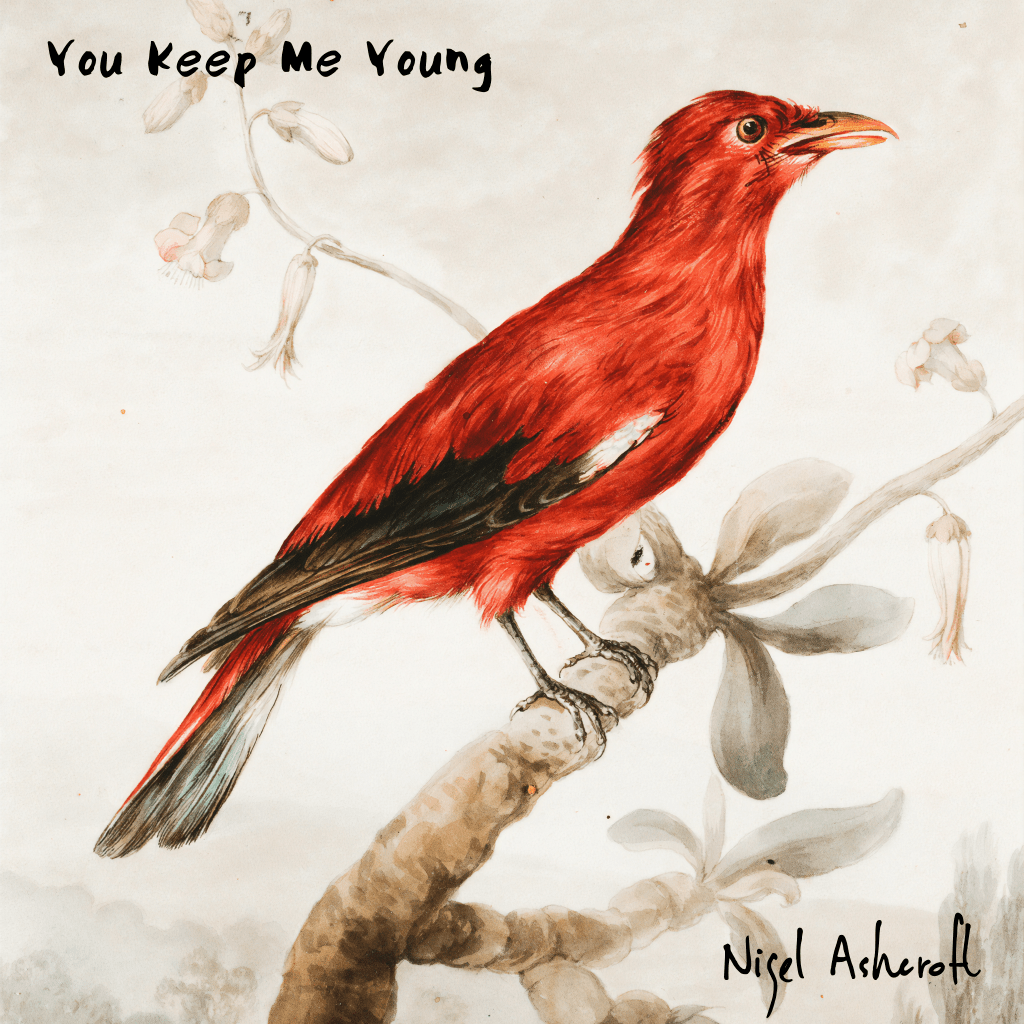
You Keep Me Young

Istanbul, 2008

There are times when I am reminded of the power of music. I was at a house party recently, set up to play in the living room. An elderly man was next to me, hunched up on the sofa with a blanket over his shoulders. It was clear, from his vacant, faraway look, he had quite advanced dementia. The other guests were outside on the apartment’s terrace enjoying the warm summer evening with an ear and an eye to the room. I smiled at my audience of one. He stared back at me blankly. I began to play. Then, something happened. He stirred. A glint appeared in his eye. His posture changed. The life was seeping back into him. With each song he recognised in the depths of his addled mind, he became more animated. Members of his family drifted in from the terrace in wonder, taking it in turns to dance with him. It was as if a magical portal had temporarily opened to his younger self, and we were all suspended within this beautiful moment. He smiled at his family in recognition and they smiled at him with love and tears in their eyes. It had a profound effect on me, I was deeply humbled. 

Eleven years earlier, I had been busking my way from West to East overland with my then-girlfriend (and now dear friend), Jeanne. We had stopped in Istanbul for a few weeks before we were to venture into Iran. I had been playing a lot on Caddesi Istiklal, an insanely busy shopping street, stretching for miles through the European side of the city. I’d had a wonderful response from passers-by, crowds gathering, applauding, tipping generously. I loved this city. But, I was constantly being hassled by the police. 

One day, after playing, I noticed a young man trailing me through the market that flanked the rather impressive mosque at Eminonu. He was ducking in and out of stalls so as not to be detected, but seemed almost comic in his method. I had good reason to be paranoid. Only a couple of days beforehand I’d been bundled into a police van while I was minding my own business, and driven into a shadowy alley. They had tried to take my guitar but I’d held onto it with all my might. Eventually, they relented, throwing me out onto the street with a punch to the shoulder. 

I decided to confront my stalker. I turned abruptly, taking him by surprise. He seemed vulnerable, and sad. He was obviously not the police.

And so it was that I found myself in a taxi headed to the far outskirts of one of the biggest cities in the world, to a residential suburb of utilitarian grey apartment blocks. Osman, my stalker, paid the driver and asked him to wait. I removed my gear from the boot.

“So, you will wait for my signal? I will be over there on the corner of the street,” he said, excitedly.

I promised him I would and set up my gear next to the barred-window of a ground floor flat.

I looked over at the opposing building. 5th floor, he’d said. I looked up to the balconies. They were all vacant. I caught Osman in my peripheral vision, signalling me. I began to play.

He had asked for a romantic song. As I played a young woman appeared, a light blue headscarf framing her pretty face. An older woman arrived alongside her as the neighbouring balconies started to fill. I thought I was in for a lynching. To my surprise, my audience seemed to regard me with a fond bemusement rather than any anger. A gentle tap on my shoulder shook me. I turned to see a trembling hand reaching through the bars of the window, proffering a single coin, and a wide, toothless grin. I hadn’t realised that I had set up directly outside a bedbound, elderly man’s room. 

The plan had worked though. I had won Osman back his girl with my song, and inadvertently stirred something deep within this old man. Looking down at the coin in my hand, smiling, I got back into the taxi and returned to the city alone a far richer man.

We would see Osman and his girlfriend later that evening, happy and together again. Osman’s family had a sweet stall among the many temporary stalls that had been erected n the grounds of the Blue Mosque for Ramazan. We were their guests. It was a wonderfully electric atmosphere, people picnicking in the twilit gardens, breaking fast, the gentle hun of chatter, beneath the ever-watchful gaze of the mosque’s illuminated dome.

The song I sang that day was a song I had only just finished writing, You Keep Me Young. Here it is;

<a href=”http://nigelashcroft.bandcamp.com/track/you-keep-me-young”>You Keep Me Young by Nigel Ashcroft</a>

The Donkey & The Storm

Dear Baby Violet,

I would like to tell you the tale of how I met your mother one sweltering summer’s afternoon in Suffolk, not so very long ago. There are days, you will learn, when the Gods interfere and it changes the course of everything to come. This would be one of those days.

I woke up in the usual way, to the excitable chatter of the man on the radio. The smell of coffee drew me to the living room. I’d been lodging with my dear friend Bruce, a loveable labrador of a man, in his Norwich pad (that’s Uncle Brucey to you). It was a laid-back and amicable arrangement which allowed me to go off and travel in the winter months. That morning, I found him poised upon the edge of the sofa in his underpants and T-shirt, watching a match I was pretty sure he’d already seen. As much as I loved the man, I did not share his passion for football.

I got into my car and took the long drive to the old market town where you would be born a year later. I had left early. It was market day after all and competition for busking spots could be tough. When I arrived, there was a donkey in my pitch. He was a friendly-looking donkey, which is more than I could say for his scowling, human companion. Clutching a miserable bunch of leafy carrots in one hand and a collection tin for a donkey sanctuary in the other, the thick-set brute smirked at my tardiness. I had crossed paths (and words) with Donkey Man before. He was a foul-mouthed creature with a broad East London accent and a bad attitude. Little did I know, however, the Gods had made their first move. I decided to head elsewhere, to a place I had never been before.

I noticed your mother immediately. She was with your grandmother and your brother, watching me play. After my song, she gave your brother a coin for him to put in my guitar case. I crouched down and smiled at him. I had no idea he would become such a big part of my life. I caught your mother’s eye. She was beautiful. Somehow familiar. She smiled. And then she was gone. It’s funny but I remember a feeling of great sadness. I was thinking how there was some lucky guy out there, somewhere.

As I got ready to leave later that day, I felt a tap on my shoulder. I turned to see your mother. She smiled awkwardly and handed me a note wrapped around a sprig of lavender. And then she was gone again.

She was here visiting family, returning to Ireland, where she lived, in just over a week. Strangely though, I was heading to Ireland myself (with my musician friend Felix) the very next day for a week’s tour. It was with cruel irony that I would be returning to England by ferry the very day that she would be flying overhead back to Ireland. 

I did my tour but couldn’t stop thinking about her and annoying Felix with talk of this mysterious woman. But then the Gods played their next move. A freak storm cancelled her flight. It gave us a tiny, fortuitous window in which to meet. 

I walked into the hidden garden of the cafe on that hazy, luminescent morning. I was nervous. But then I saw her, waiting at the back, framed by the arched trellis, sipping tea, in a blue summer dress, and all my feelings of apprehension disappeared.

And the Gods, they did smile.

Listen to this week’s track on;

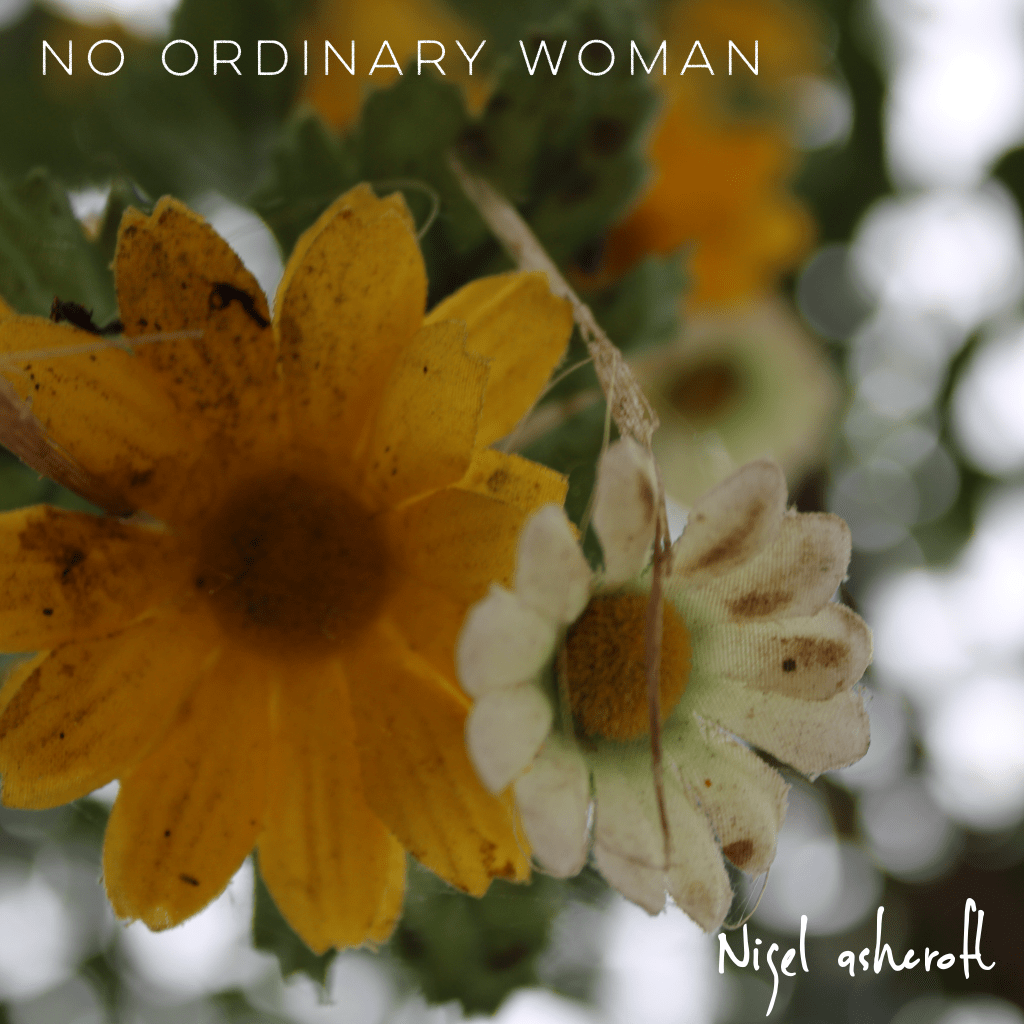
No Ordinary Woman

I live in a house. A very old house. 650 years very old, to be precise. It is a crooked, timber-framed house in a town of crooked, timber-framed houses. Inside, a woodburning stove does its best to stave off the winter bite, though the cold, stone floor and aged front door do little to help. Bunches of wild herbs have been strung up here and there to dry. Feathers, stones, and other treasures found on long walks, adorn the windowsills. Jars of home-made jams and vinegars, syrups and chutneys, fill the pantry. At the back door, a wicker basket, muddied boots, and a forager’s-knife show evidence of a recent expedition. Upstairs, low beams, darkly charred from the medieval fire that long ago burned in what was once an open hall, must be carefully maneuvered to avoid a concussion. Furniture throughout has been propped up with bricks or pieces of wood in order to make it level, and many of the windows have been painted shut so they don’t fall to pieces. It is, for all intents and purposes, an infuriating and impractical house. But it is home.


I am attempting to herd a blubbering 4 year old down the front steps. There has been a misunderstanding. I understood we were not taking his scooter to pre-school. He understood that we were. The fall-out seems extreme.

“I think we should take him to a professional,” says his mother from the doorway, cradling our baby daughter in her arms.
I look at the boy and shrug.
“It’s just a tantrum,” I say, “But yeah, sure, whatever.”
She looks at me with incredulity.
“I was talking about the hair,” she says.
“Ah yes, the hair.”


I take in the hillbilly mullet she has just carved out of his beautiful, blonde locks. Poor boy. At least the scooter has distracted him from looking in the mirror. I strap him into his car-seat, still sobbing. By the time I have circled the car and got behind the wheel, he has transformed, in that Jeckyl and Hyde way that small children do, into a beaming, happy child with eyes full of wonder.
“Nigel,” he says. “Where do people go when they die?”
I wince. It is too early in the morning to be quizzed on the subject of mortality. I fire the question back at him.
“Where do you think they go?”
He ponders it for a moment, then without a hint of irony says, “to Stowmarket”.


It’s strange but a year and a half ago I didn’t even know he existed and yet now I can’t imagine life without him. I look back at his smiling mother and his baby sister, framed by the doorway to our home, with its flaking, Suffolk -pink facade and empty plant pots. She waves goodbye. We wave back. I feel utterly blessed. She is, in one way, like a mirror to my thoughts, my emotions, my frustrations. And yet, in another way, she is unlike anyone I have ever known. She is no ordinary woman, after all. And to think, if it hadn’t been for a donkey and a storm we would never have met. But we’ll get to that the next time. In the meantime, this is this week’s offering to you, recorded live in my home on this lazy Sunday morning, No Ordinary Woman.

https://nigelashcroft.bandcamp.com/track/no-ordinary-woman

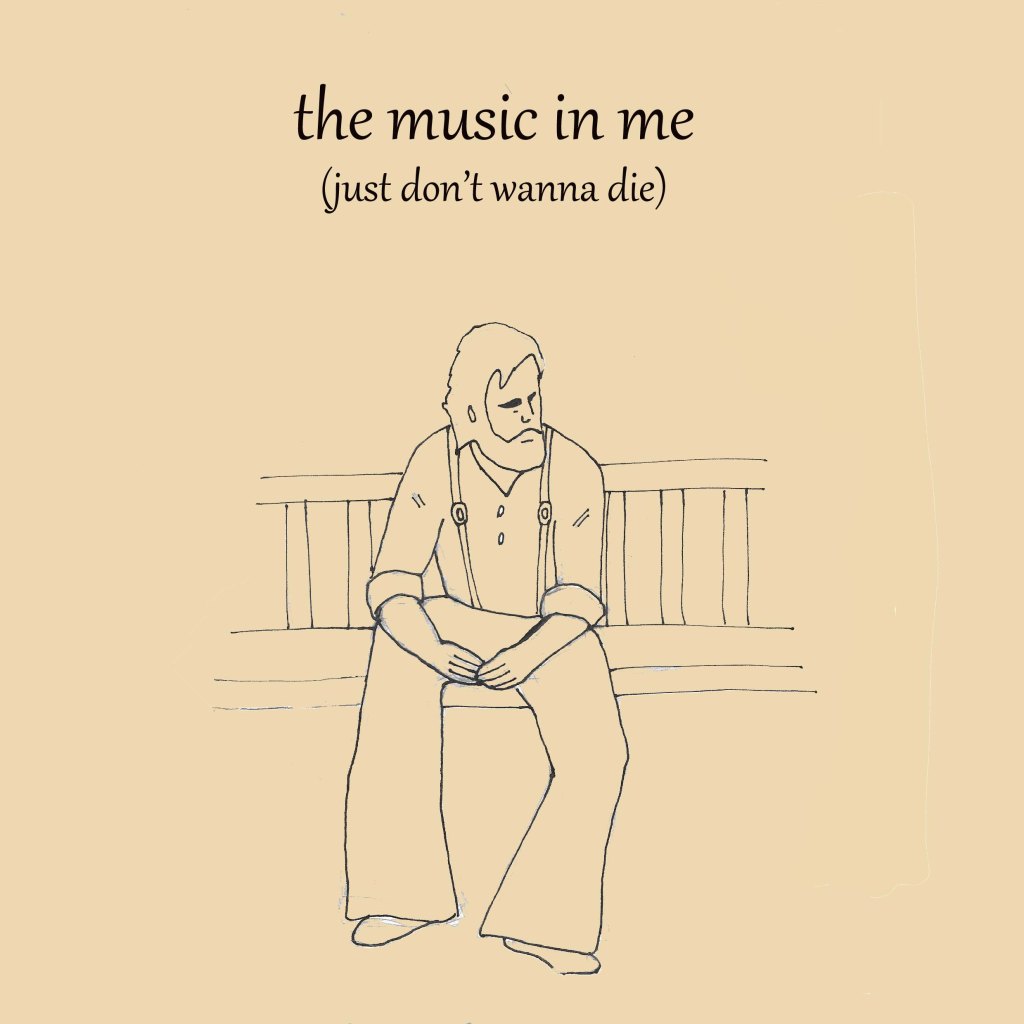
The Music In Me (just don’t wanna die)

Grenoble, France, 1995 – Suffolk, England 2020

The first gig I ever did was in a brothel in the south of France. I was twenty years old. On paper I was a student at Joseph Fourier University in Grenoble, but in reality I was learning life in other ways. I didn’t realise it was a brothel, it was, after all, just a bar where I had worked a few shifts. But as evening folded into night, an occasional knock would stir a weary sentinel to slide open a slat before admitting a solitary caller. Across the room a rectangle of light would appear revealing an antechamber, illuminating a red velvet chaise longue adorned with a pretty girl, before it sealed tight once again. Sometimes the caller would reappear for a drink, but often he would make his discreet exit into the night through some other portal.


The establishment was owned by a dark, forboding Madame with gypsy eyes and a Galloise permanently smouldering at the sharp edge of her mouth. After having seen me walking around campus with my guitar, she informed me in no uncertain terms that I was to perform a gig in order to lure students to her bar. And so it was, my meek protestations duly ignored, that I played my first ever gig in a bar beneath a brothel. I’m sure I was awful.


It was around this time I met Fergus, a softly-spoken Scottish troubadour. He was a couple of years my senior with rather impressive lambchops. I’d seen him busking in the streets of Grenoble. He generously took me under his wing and let me shadow him for a while. We hitch-hiked across the snow-laden Alps and busked during the Venice Carnival to a plazaful of masked revellers. As the notes mounted up in the guitar case, I saw a whole new world of opportunity open up, (it was only afterwards I realised a mountain of devalued Italian Lire was a lot more impressive to the eye than it was to the wallet).


I stayed in Grenoble until the academic year ended and returned to England. My plans of going off troubadour-like around Europe scuppered by an unfortunate incident involving a reversing vehicle, the Police Chief of Orleans and my ill-fated guitar. As is life.


I half-heartedly finished my studies in England but was now consumed with songwriting and being in a band. I worked bars for a few years and got an office job but I found myself constantly pre-occupied with music. I was convinced the band was going to ‘make it’ whatever ‘make it’ meant. Though not even our occasional raids on London record companies procured that golden record contract that was going to change all our lives. The band was going nowhere. I hated my office job and wasn’t very good at it, so they promoted me. I hated it more. One day I walked out. I remembered that feeling I’d had in Venice years earlier, I yearned to be free and do things my own way. It was the end of 2001, the planes had just crashed into the Twin Towers, life was short. And so, I bought a one way ticket to India.

That was 18 years ago. I have made my living from music ever since. I have seen the world. I’ve written hundreds of songs in that time but most have never seen the light of day. Some are good. Some, not so good. Some, I am very proud of. Some I have written with others on projects I passionately believed in, and yet for some reason when it came down to it, a glimmer of success perhaps followed by a crippling case of self-doubt, I walked away. I felt more comfortable with the anonymity of playing on the streets. Nobody to answer to. Nobody to let down.

I would see Fergus one more time after that year in Grenoble. It was some years later and he passed me as I was busking in a tunnel in the London Underground. We both did a double take, then smiling in recognition, we embraced one another. We went to lunch and talked about life. He was living on a boat on the Thames with his girlfriend. He seemed happy. I never saw him again. A few years after that I heard that he had died in a motorcycle accident. The news upset me greatly. I will always be thankful to him.

A new decade has begun. I have a baby daughter now and a 4 year old stepson, and I have met the love of my life. Nothing prepares you for this kind of love. And so it’s time, silent until now, to give my songs and stories a voice. Every Sunday of 2020 I will post a blog and release an original song.

52 Sundays,
52 stories,
52 songs.

Listen to the first song on

https://nigelashcroft.bandcamp.com/track/the-music-in-me-just-dont-wanna-die

Design a site like this with WordPress.com
Get started